Regulatory Wave Drives Q4 Produced Water Storage and Landfill Capping Projects
Three October developments in Canada, Pakistan, and India show containment rules and capital expenditure converging — with HDPE geomembranes, geotextiles, and GCLs at the center.
Industry News
Shanghai Yingfan Editorial Team
Oct 7 – Oct 28, 2026
7 min read
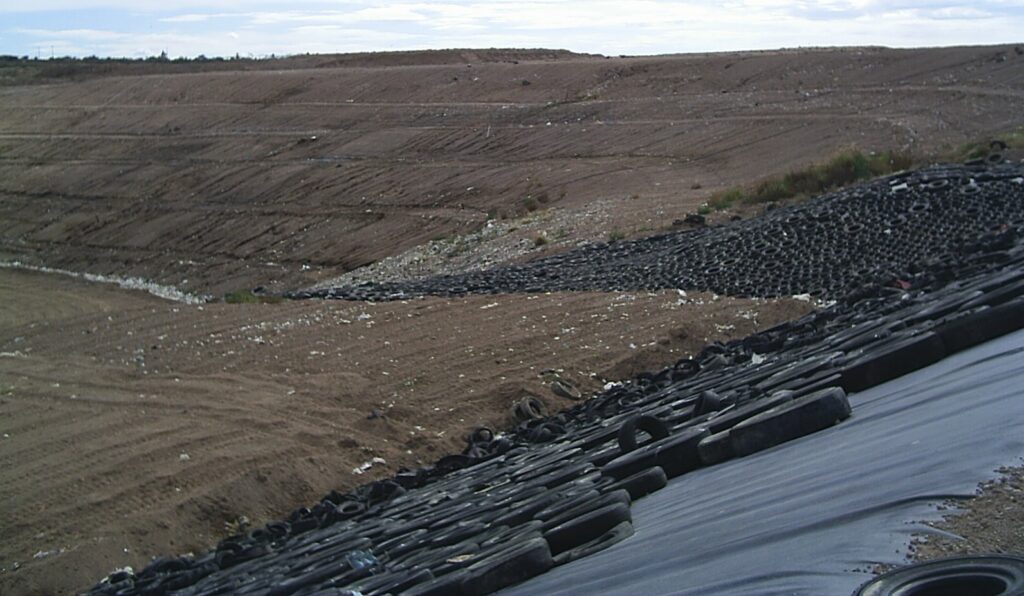
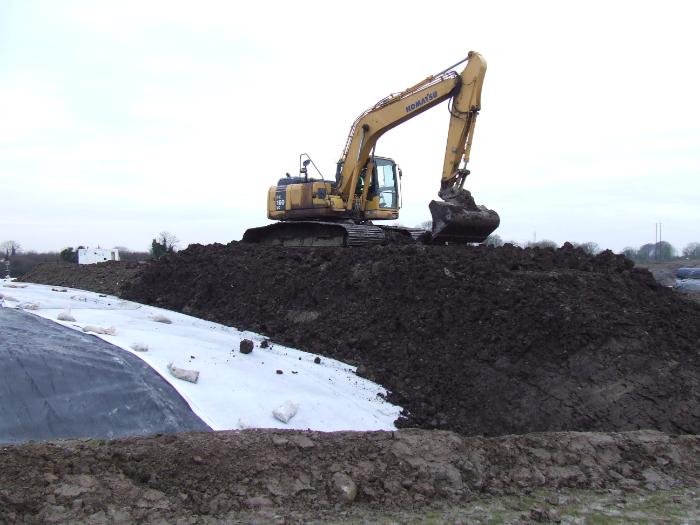
Final capping on a municipal landfill: black HDPE geomembrane overlain by a white geosynthetic drainage layer, which will be covered with subsoil and topsoil. This composite arrangement is now standard for post-closure containment. Credit: University of Galway Leachate Programme, used under educational fair use.
The last quarter of 2026 is shaping up as a landmark period for engineered containment. In the space of three weeks, three projects spanning three continents have signalled that the conjunction of tighter regulation and operational necessity is now translating into concrete demand for geosynthetic liner systems.
Three projects, one signal
Oct 7, 2026
Canada's First 25,000 m³ Concept Tank Approved
Layfield and Concept Tanks earned the first permanent approval under BC's updated produced water storage guidelines. The double-lined tank with conductive leak detection serves a large natural gas producer in Northeast BC.
Oct 14, 2026
Fairmead Landfill Liner Expansion Tender
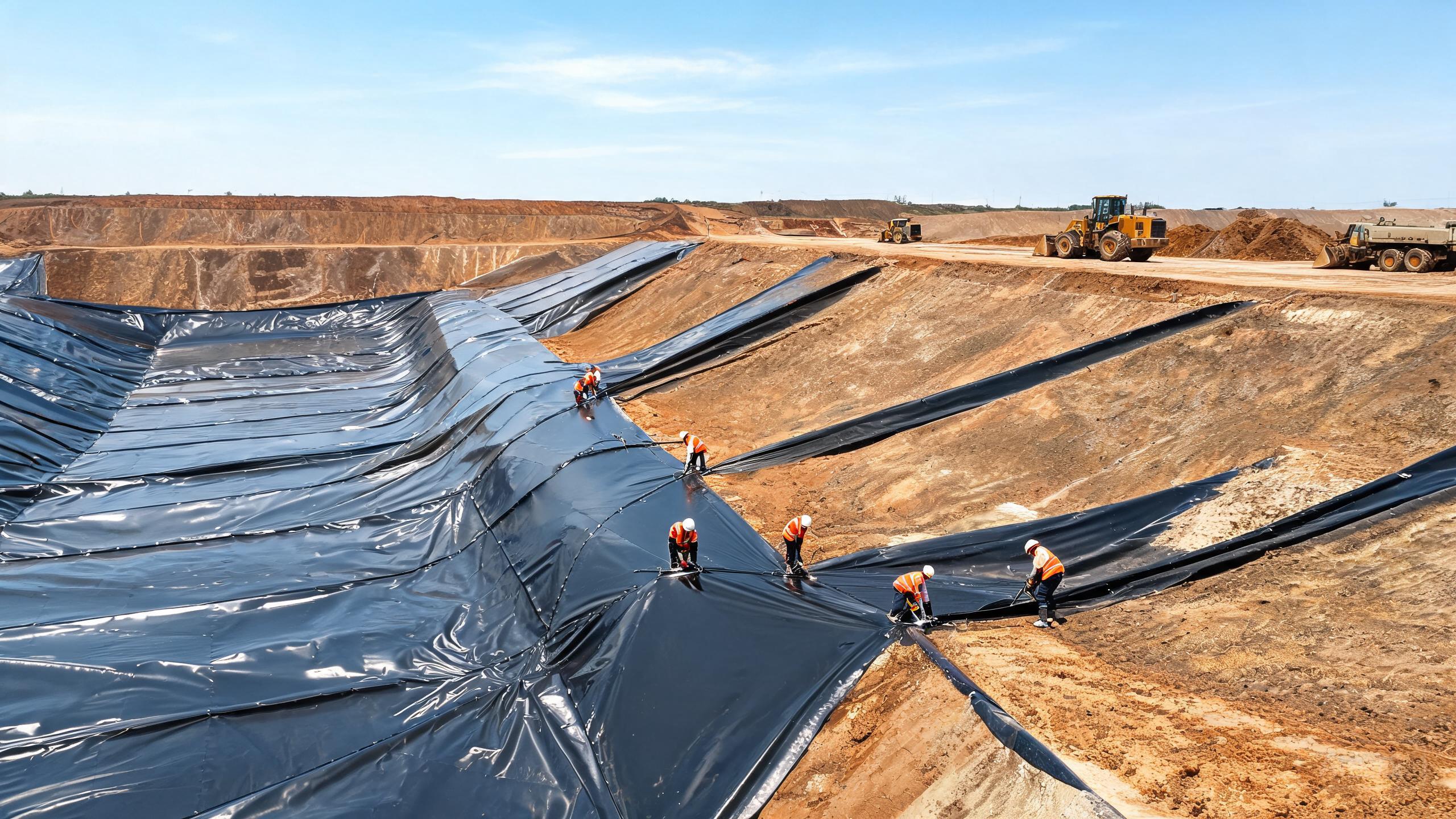
Tamil Nadu (India) issued a tender for HDPE geomembrane (GRI-GM13, 2.0 mm) for Cell 3 liner expansion and leachate impoundment at Fairmead Landfill — a 2024-approved Class II MSW site.
Oct 20, 2026
Sindh's First Engineered Landfill Inaugurated
CM Murad inaugurated Karachi's 150-acre engineered landfill — Sindh's first — with an engineered lining system including geotextile materials to protect underlying soil from leachate contamination.
Individually, each is a significant project. Collectively, they describe a trend: containment is no longer a local afterthought. Regulators are writing performance standards that cascade down to material specifications, and operators are responding with capital commitments that were deferred only five years ago.
25,000 m³
Canada's first approved permanent lined Concept Tank, BC Energy Regulator
2.0 mm
HDPE geomembrane thickness specified in the Fairmead Landfill tender (GRI-GM13)
Produced water storage moves above ground — and lined
Canada's Concept Tank milestone is notable because it marks a regulatory regime change. The BC Energy Regulator's updated Management of Saline Fluids for Hydraulic Fracturing Guideline now recognizes lined engineered tank systems as an accepted solution for large-scale above-ground fluid storage. That recognition matters: it unlocks permitting for projects that previously could only route produced water to deep disposal wells or open pit impoundments.
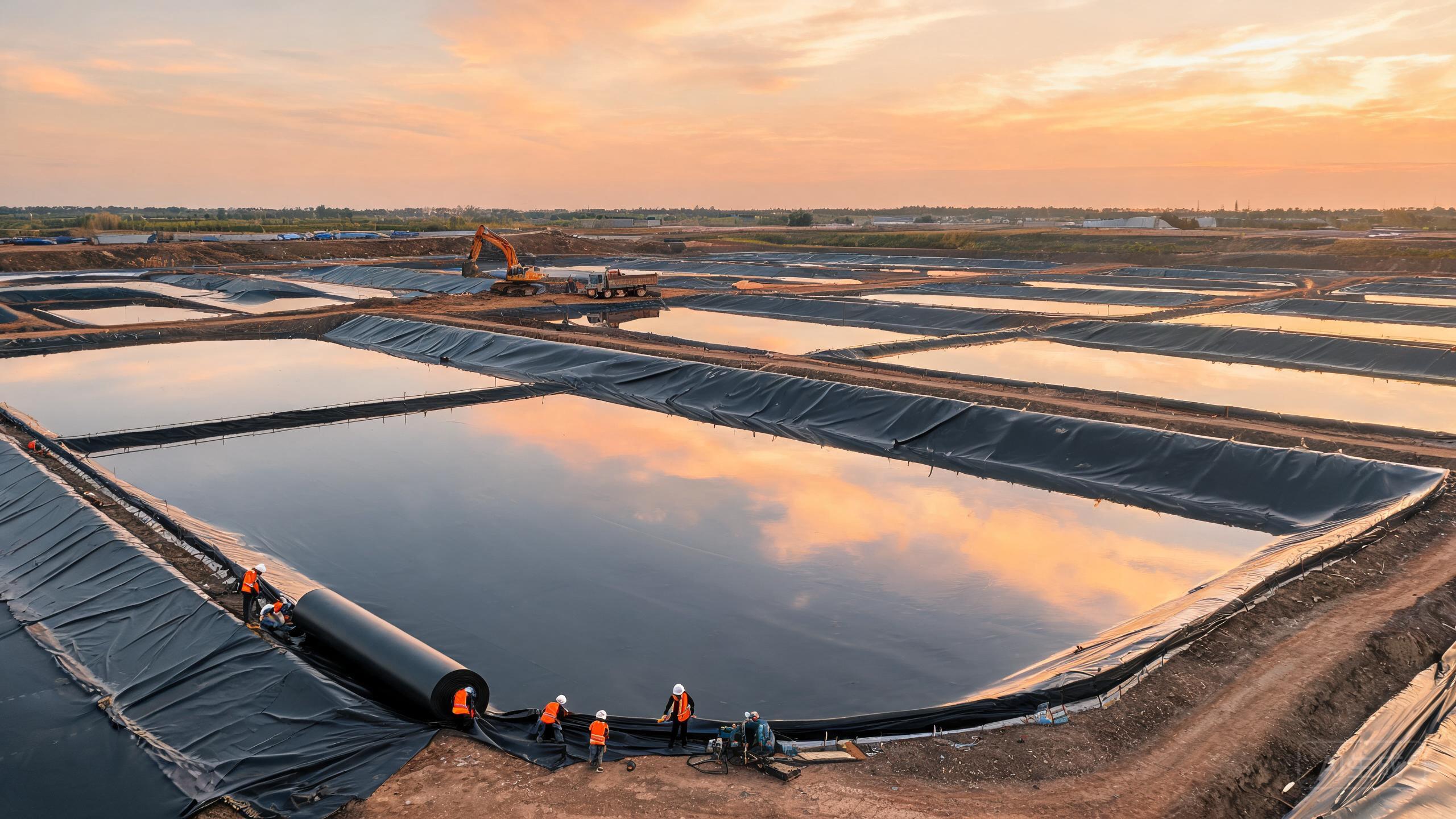
The 25,000 m³ tank in Northeast BC is a modular, relocatable system featuring a double-lined containment design with a conductive leak-detection layer. It will support a major natural gas producer's water-reuse program, reducing freshwater intake for fracking operations.
The double-liner architecture here is the same composite stack Shanghai Yingfan supplies: an HDPE geomembrane for primary impermeability, a non-woven geotextile for puncture protection and filtration, and often a bentonite GCL as a secondary self-sealing layer. What is new is that this system is now a certified, permitted solution for a high-stakes, above-ground energy application — not only for underground landfills.
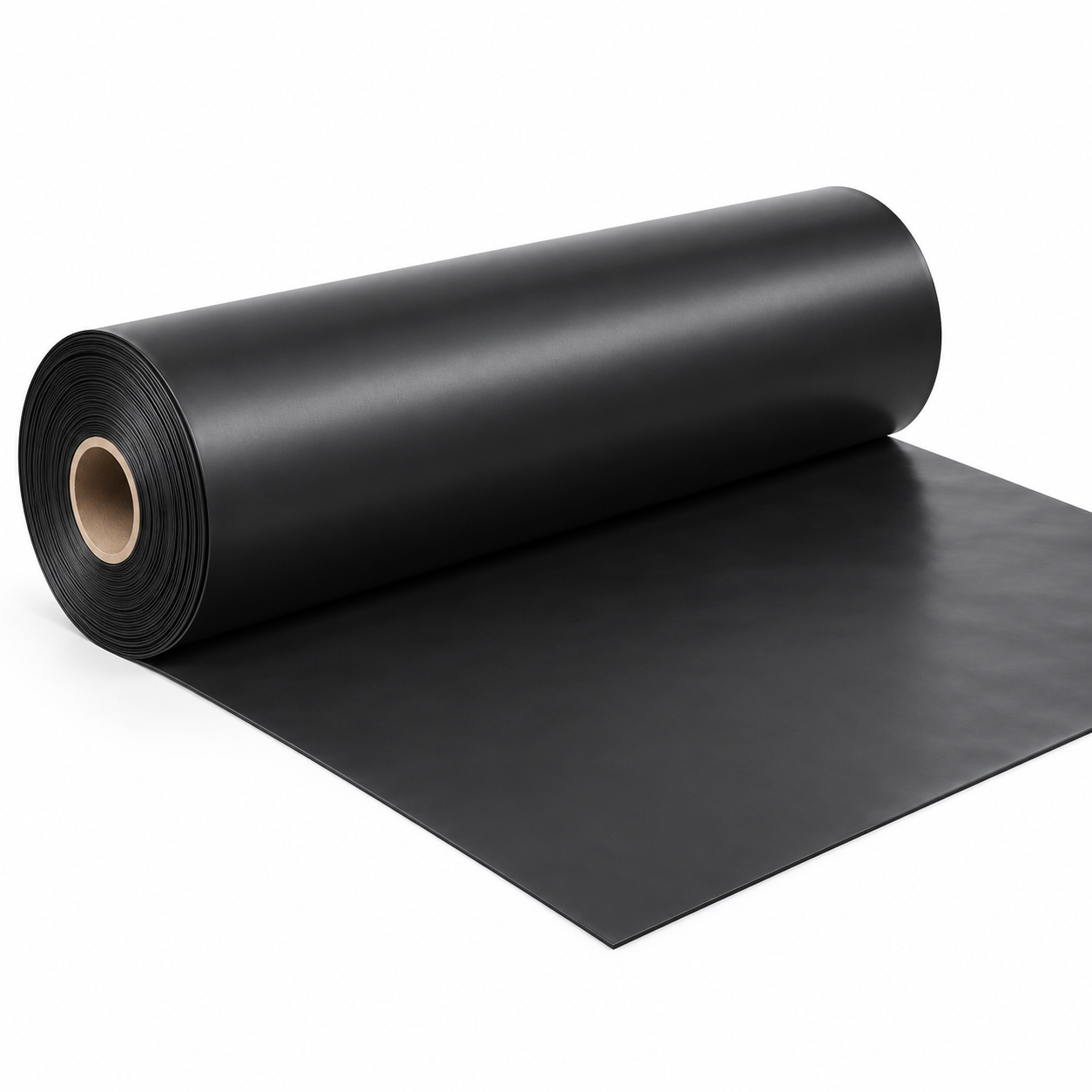
Close-up view of an HDPE geomembrane sheet. Uniform thickness, consistent surface finish, and fusion-weld compatibility are the baseline requirements for any liner entering a regulated containment project. Credit: LibreTexts — Geomembrana AGS, authored by Steven Earle (Vancouver Island University), reused under the CC-BY 4.0 license.
Landfill regulation shifts from "new cells" to "full lifecycle"
Meanwhile, in Asia, landfill development is accelerating with engineering rigor that was missing from earlier generations. Karachi's 150-acre site — Sindh's first engineered landfill — is designed with lining and leachate-management systems, a step change from the region's historical reliance on unlined dump sites. The project has political tailwind: the Sindh government has committed to phase out open waste dumping citywide by 2030, and engineered landfills are the centrepiece of that plan.
The Fairmead Landfill tender in Tamil Nadu shows that even established sites are investing in expansion with strict material standards. The specification calls for 2.0 mm HDPE geomembrane meeting GRI-GM13, the global gold standard for landfill liners — significant because it excludes lower-cost, lower-performance alternatives that have been used in some regional projects.
A liner is no longer just a membrane — it is a system with documented welds, quantified permeability, and a planned end-of-capping transition.Shanghai Yingfan Editorial Team
From liner to cap: the full composite picture
What ties these three stories together is that none of them is a single-product specification. Each project calls for a composite system — layers chosen to compensate for one another's weaknesses:
HDPE geomembrane provides the primary impermeable barrier, resisting chemical attack from leachate or produced fluids.
Non-woven geotextile sits beneath the membrane to protect it from puncture by subgrade aggregate, and above it to filter fine solids that could clog the leachate collection system.
Bentonite GCL acts as a self-sealing secondary layer. When hydrated, the bentonite swells to form an effective barrier that can close minor punctures — a feature regulators are increasingly writing into specifications.
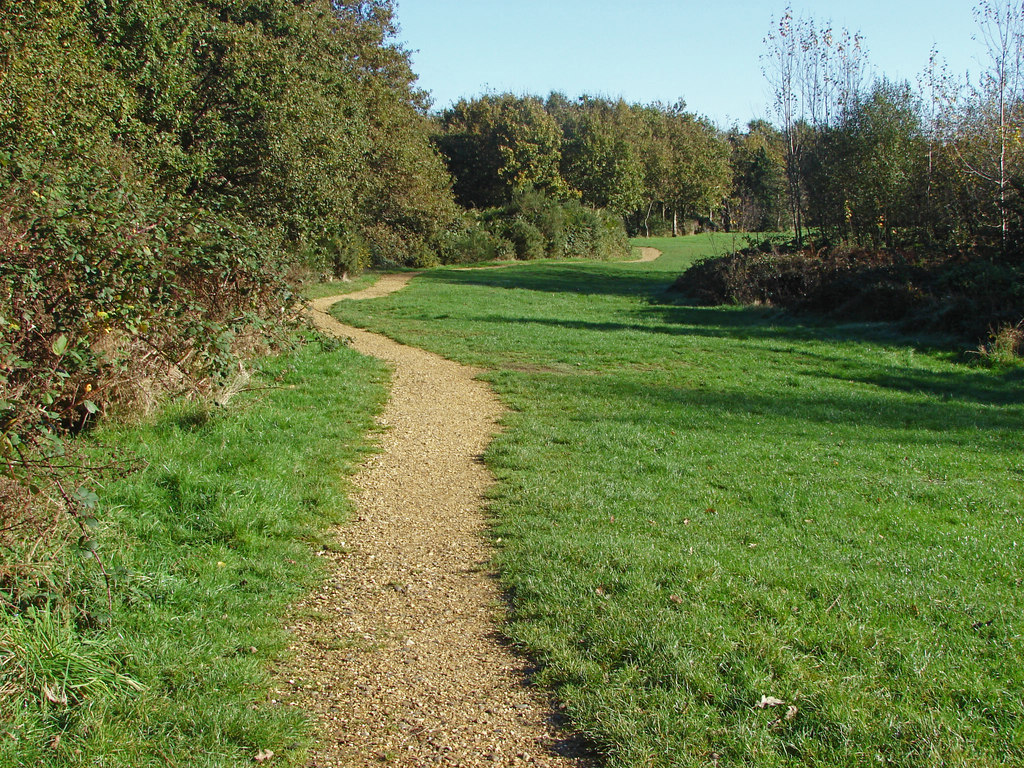
Longhill Park, Bracknell (UK) — a former landfill site capped with an engineered barrier system and restored to green space. Post-closure capping with geomembrane, geotextile, and GCL layers is a requirement under EU landfill regulations. Credit: LibreTexts — photo by Steven Earle, reused under the CC-BY 4.0 license.
What specifiers are asking for now
Across these projects, four procurement patterns emerge that are worth noting for 2027 planning:
Certification, not just thickness. The Fairmead tender explicitly names GRI-GM13 — a third-party-audited standard that covers resin, OIT, carbon-black loading, seam performance, and more. A datasheet stating "1.5 mm HDPE" no longer cuts it.
Documented seam quality. Double-lined systems like the BC Concept Tank require weld-testing protocols with destructive and non-destructive coupon records submitted alongside the liner.
Leak detection integration. The conductive layer in the BC tank is part of the liner specification, not an aftermarket add-on. Regulators want to see how integrity will be monitored before a centimetre of soil is placed.
End-of-life planning. Even above-ground tanks are now specified with a removal and disposal plan. This is why relocatable systems are gaining market share — they align with circular-economy expectations that didn't exist a decade ago.
Outlook
The Q4 activity is not a one-quarter spike. The drivers are structural: regulators are learning from earlier liner failures and tightening performance standards; operators are moving away from open, unlined impoundments under growing public scrutiny; and the global push to phase out unlined dumping is creating a backlog of sites that need engineered containment.
For suppliers, this means the winning proposition is not any single product, but the composite system — HDPE geomembrane, non-woven geotextile, and bentonite GCL — delivered with certification, installation support, and a documentation package that regulators will actually review. Shanghai Yingfan continues to align its portfolio with this trend.
Specifying a lined containment project?
Talk to our technical team about HDPE geomembrane, non-woven geotextile, and GCL systems specified to GRI-GM13 and international landfill standards.