Integrated Solutions from Production, R&D, Construction to After-sales.
PROFESSIONAL MANUFACTURER
ENVIRONMENTAL PROTECTION EXPERT

Aquaculture Boom and Tighter Containment Rules Lift HDPE Geomembrane Demand to Record Highs in 2026
Across pond farming, landfills, and mining, the case for high-density polyethylene liners keeps strengthening — and all three of Shanghai Yingfan's core geosynthetics are in the mix.
By the Yingfan Editorial Team ·
SHANGHAI — Demand for HDPE geomembrane is running at record levels in 2026, pulled higher by two forces that rarely move in sync: the rapid expansion of commercial aquaculture and a steady tightening of environmental containment rules for waste, mining, and water. Trade platforms tracking buyer inquiries report “exceptional growth” in aquaculture pond liners, while the broader geomembrane market is on pace to climb from USD 3.39 billion this year to USD 5.20 billion by 2031 — a compound annual growth rate of about 7.5 percent. For Shanghai Yingfan, which supplies all three of the materials these projects depend on — HDPE geomembrane, nonwoven geotextile, and bentonite geosynthetic clay liner (GCL) — the trend lands squarely on the products it makes.
Global geomembrane market
USD 3.39B
Estimated size, 2026
Projected market size
USD 5.20B
Forecast, 2031
Annual growth
~7.5%
CAGR, 2026–2031
HDPE share
~35%
Of the broader geosynthetics market
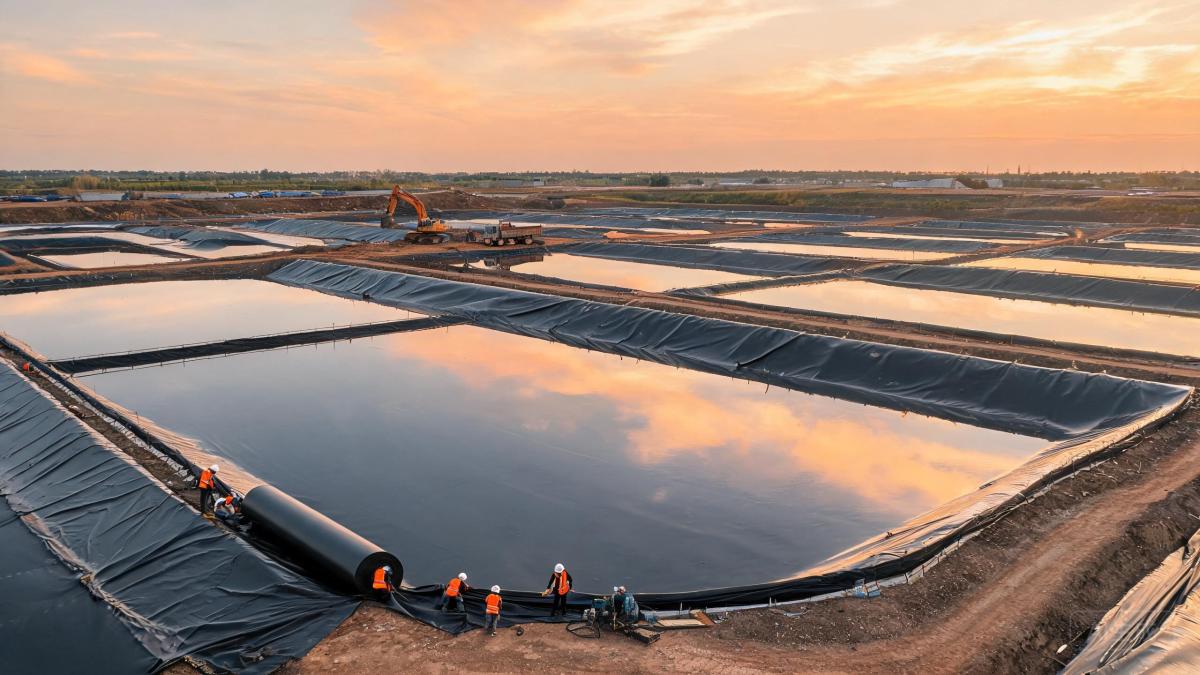
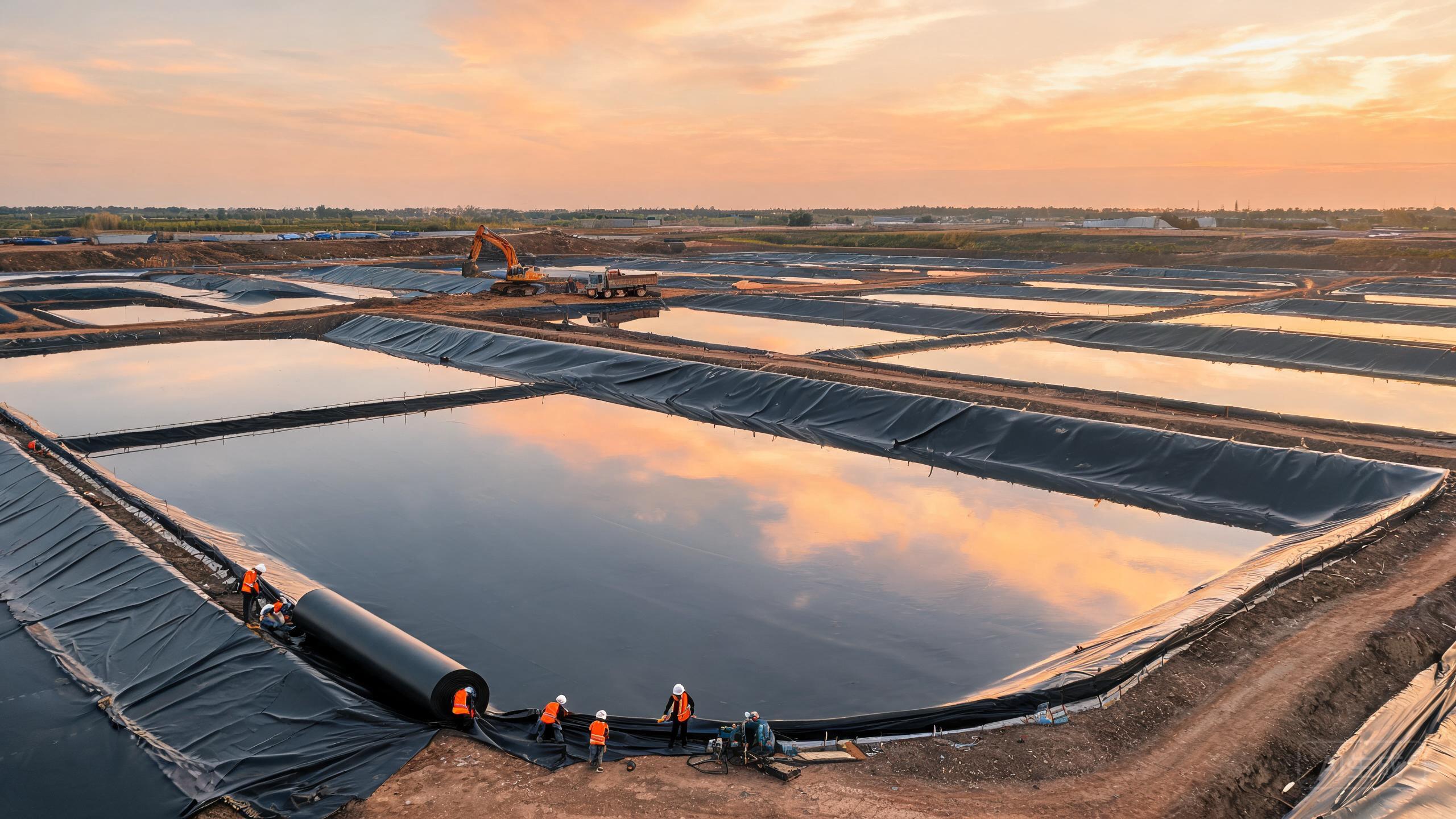
Figure 1. An HDPE-lined aquaculture pond complex.
Smooth, UV-stabilized liners are now among the fastest-moving geomembrane categories as commercial pond farming expands. Illustrative image.
Aquaculture is doing the heavy lifting
Pond aquaculture has quietly become one of the fastest-growing outlets for HDPE geomembrane. Farmers lining shrimp, tilapia, and recirculating ponds with smooth HDPE sheets get a seamless, root- and burrow-proof basin that holds water, stands up to ultraviolet exposure, and can be seamed on site with hot-wedge welders. The shift shows up clearly in procurement data: according to trade figures published by Alibaba.com, aquaculture pond liners are now among the fastest-moving geomembrane categories by buyer interest.
The geometry of these farms explains the volumes. A single medium-sized site can call for tens of thousands of square meters of liner, so when a region modernizes its ponds, the orders compound quickly. HDPE fits the job well — its low permeability, UV stabilization, and tear resistance give a lined pond a long service life, and the smooth surface is easy to clean and disinfect between production cycles.
Regulation keeps the landfill and mining pipeline full
If aquaculture is the breakout story, environmental regulation is the steadier one. Stricter rules on mining containment, landfill cells, wastewater, and hazardous waste are driving secure, engineered barrier systems wherever liquids are stored or processed. The result is a pipeline that stays full through the year: geomembrane tender activity remained active across September, including a municipal landfill liner procurement in China and geomembrane-layer tenders in the Middle East with deadlines running into October.
For mining, the same membrane works twice — keeping process solutions such as heap-leach liquor, brine, and tailings water where they belong, and keeping groundwater out. A recently completed salt-evaporation project lined more than 3.4 million square meters of ponds with HDPE to prevent brine seepage under sustained heat and UV, a reminder of how large a single containment order can run.
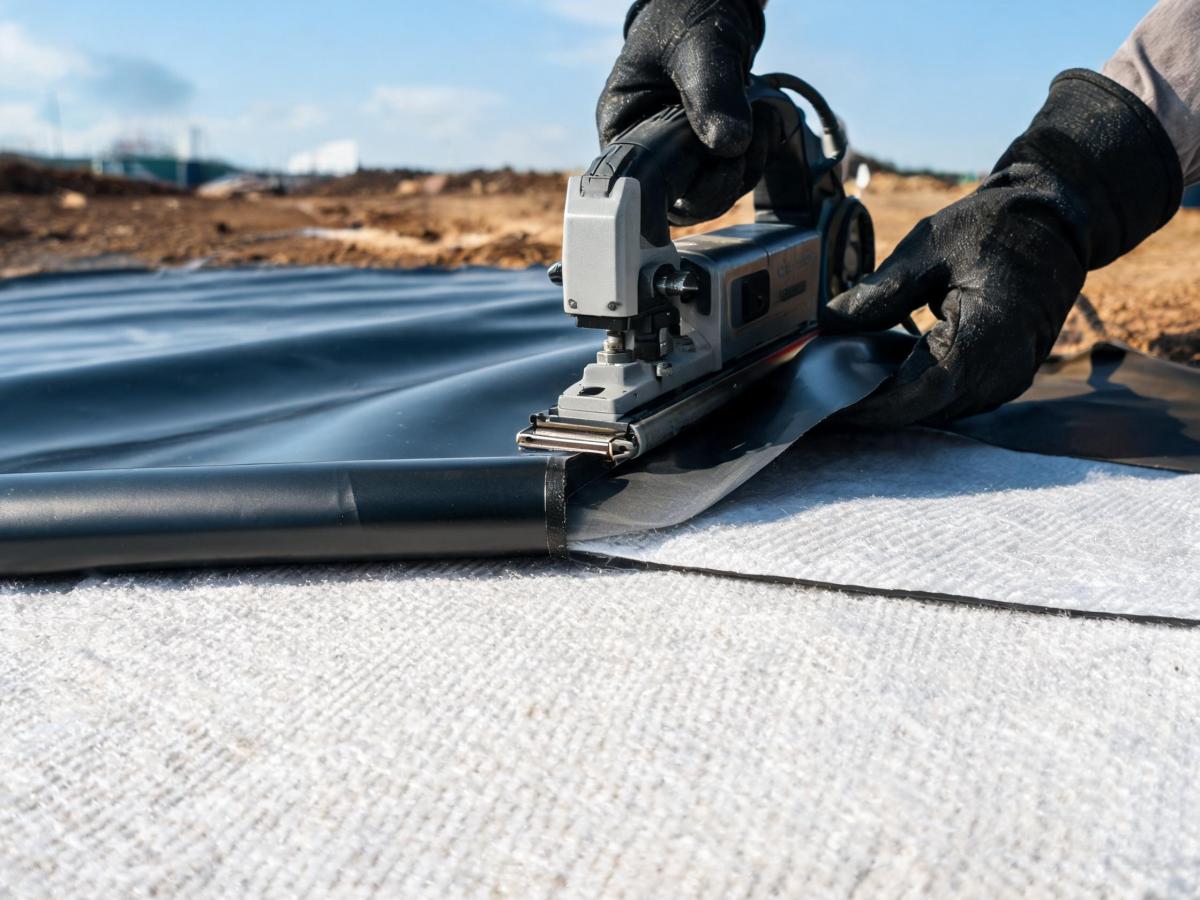
Figure 2. Hot-wedge seaming over a geotextile protection layer.
In a typical liner stack, a nonwoven geotextile cushions the HDPE membrane while a bentonite GCL provides a self-sealing backup beneath. Illustrative image.
Three materials, one containment system
A modern liner is rarely a single sheet. It is a stack, and each of Shanghai Yingfan's flagship products fills a distinct role in it.
HDPE geomembrane is the primary impermeable barrier — the membrane that actually stops the liquid.
Nonwoven geotextile is the protection and separation layer, cushioning the membrane against sharp aggregate, filtering soil, and preventing puncture both above and below.
Bentonite GCL is the self-sealing backup. Its sodium bentonite swells on contact with water, closing small defects and adding redundancy at overlaps and around penetrations.
A typical specification pairs a needle-punched nonwoven geotextile above the geomembrane for puncture protection, the HDPE membrane as the primary seal, and a GCL beneath as a self-healing secondary barrier. Buying the three as a matched, tested system — rather than sourcing each layer separately — is what makes seam testing, quality records, and long-term warranty add up.
For project buyers: specify geomembrane, geotextile, and GCL as one tested containment system, not three separate line items. Their long-term performance depends on how the layers interact under load, and mismatched weights or resin grades are where most liner failures actually begin.
What to watch through the autumn season
As the autumn construction season gets underway across Asia-Pacific, the projects now breaking ground — reservoirs, landfill cells, heap-leach pads, and aquaculture expansions — will keep drawing on all three of these materials. The demand cycle that 2026 has made plain is unlikely to be a single-year story; it is the shape of a market where clean water, contained waste, and efficient farming all run through the same black sheet of HDPE.
Sources
MarketsandMarkets, Geomembranes Market report — market size, forecast, and CAGR (2026).
Industry Research, High Density Polyethylene (HDPE) Geomembrane Market analysis (2026).
Haoyang Geosynthetics, HDPE geomembrane market trend guide — HDPE segment growth and geosynthetics share (2026).
Hyco Materials, “Aquaculture Boom Drives HDPE Geomembrane Demand to Record Highs in 2026,” citing Alibaba.com trade data (July 2026).
Solmax, case studies — salt-evaporation pond brine containment with HDPE liner (2026).
TendersOnTime, government geomembrane tender listings, accessed September 2026.



 Global Geomembrane Market on Track for USD 5.2 Billion by 2031 as Containment Rules TightenA Q4 2026 outlook on how stricter environmental mandates and infrastructure investment are reshaping demand for HDPE geomembranes, non-woven geotextiles, and geosynthetic clay liners.
![]() Global Geomembrane Market on Track for USD 5.2 Billion by 2031 as Containment Rules TightenA Q4 2026 outlook on how stricter environmental mandates and infrastructure investment are reshaping demand for HDPE geomembranes, non-woven geotextiles, and geosynthetic clay liners.
 Asia-Pacific Infrastructure Spending to Lift HDPE Geomembrane Demand Through Q4 2026
 Aquaculture Boom and Tighter Containment Rules Lift HDPE Geomembrane Demand to Record Highs in 2026
 13th International Conference on Geosynthetics Concludes in Montreal: Chinese Delegation Highlights Industry StrengthFrom September 13 to 17, 2026, the 13th International Conference on Geosynthetics (13ICG) — the premier global event in the field — was held at the Palais des congrès de Montréal, Canada. Under the theme "Legacy, Evolution & Revolution in Geosynthetics," the conference brought together more than 1,000 experts, scholars, and industry representatives. The Chinese Technical Association of Geosynthetics (CTAG) organized a delegation of over 40 participants and 14 exhibiting companies, with Chinese scholars delivering multiple technical presentations and receiving international awards.
 HDPE Liner Roll Applications: What Should Buyers Know?

Chat Online